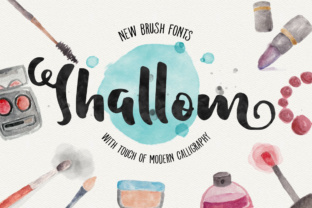
Shallom: A Stylish Script Font for Branding
There I was, staring at a blank brand board, trying to figure out how to bring a new café’s identity to life. The client wanted something warm, inviting, and a little bit elegant. I reached for my font library and stumbled upon Shallom—a gorgeous and fashionable script font made with brush and ink. It felt right from the start.
Shallom has a soft, flowing character that feels handcrafted yet refined. Its curves are gentle, its strokes have a natural rhythm, and the alternates give it a unique personality. Whether I was sketching a logo or designing a menu, the font added a touch of sophistication without being too fussy.
Testing Shallom in Real Design Projects
I started by placing it on a simple logo draft. The font worked well as a headline, adding visual interest without overpowering the design. I tried different sizes and weights, and even though it’s a script font, it held up nicely in various contexts. The bonus files included extra letters and ligatures, which made customizing the look effortless.
Next, I experimented with packaging mockups. On a coffee bag, Shallom gave the design a personal, artisanal feel. It paired beautifully with a clean sans serif for the product description, creating a balanced hierarchy. The alternates allowed me to tweak the look just enough to make it feel unique without being hard to read.
For social media graphics, I used Shallom as a header on a post promoting the café’s seasonal drinks. The font’s elegance complemented the imagery, and its readability on screens was surprisingly good. I didn’t have to worry about legibility issues, which is a big plus for a script font.
Shallom in Different Design Scenarios
When working on a business card, I found that Shallom worked best as a headline or accent. It wasn’t ideal for long paragraphs, but as a short-form text, it added a nice touch. I paired it with a bold serif font for the address and contact info, which created a strong contrast and kept the design cohesive.
On a shop sign, Shallom had a charming, handwritten quality that felt authentic. It blended well with the overall aesthetic of the café, and the alternates helped avoid repetition. I also tested it on a label sticker for a handmade soap product, where it looked polished and professional.
In editorial design, such as a brochure or menu, Shallom served as a decorative element rather than a body font. I used it for headings and subheadings, allowing it to stand out while keeping the rest of the text readable. It was especially effective when combined with a modern typography style for the main content.
Practical Tips for Using Shallom
If you’re considering using Shallom in your next project, I recommend testing it in different contexts before finalizing your design. Try it on various backgrounds, sizes, and layouts to see how it performs. Pay attention to how it looks in both digital and print formats, as this can affect its overall appearance.
Font pairing is another important consideration. Shallom works well with serif fonts for a classic look, or with sans serifs for a more contemporary feel. It also pairs nicely with other script fonts if you want to add depth and variety to your design. Just be careful not to overdo it—too many scripts can become visually overwhelming.
Check the included styles, alternates, and ligatures to see what options you have. These features can help you create a more personalized and cohesive brand identity. Also, make sure to verify the multilingual support and file formats, especially if you’re working on international projects or need specific file types for different platforms.
Shallom for Branding and Commercial Use
As a designer, I appreciate fonts that come with bonus files and clear commercial licensing. Shallom offers exactly that, making it easy to integrate into your workflow. Whether you’re designing for a small business or a creative studio, the font’s versatility ensures it can fit into a wide range of branding projects.
It’s also great for merchandise and printed marketing materials. From T-shirts to posters, Shallom adds a stylish edge that can elevate the overall look of your design. Its brush-like strokes give it a sense of movement and energy, which can help engage your audience and reinforce your brand’s personality.
Overall, Shallom is a premium font that brings a lot to the table. It’s perfect for display purposes, logo design, and short-form text. If you’re looking for a script font that’s both beautiful and practical, Shallom is definitely worth considering.
Whether you’re working on a café branding project, a skincare line, or a boutique, Shallom can help you create a visual identity that feels authentic and memorable. Its blend of elegance and approachability makes it a valuable addition to any designer’s toolkit.